Buy order-here.com ?
We are moving the project
order-here.com .
Are you interested in purchasing the domain
order-here.com ?
domain@kv-gmbh.de · 0541-91531010
Buy order-here.com ?
What material did Rutherford need?
Rutherford needed a material that was very thin and could be easily penetrated by alpha particles. He used gold foil because it could be hammered into extremely thin sheets, just a few atoms thick. This allowed the alpha particles to pass through the foil and be detected on the other side, which was crucial for his experiment to study the structure of the atom. **
What is the Rutherford nuclear model?
The Rutherford nuclear model, proposed by physicist Ernest Rutherford in 1911, describes the structure of an atom as a small, dense, positively charged nucleus at the center, surrounded by negatively charged electrons orbiting around it. This model was based on the results of Rutherford's famous gold foil experiment, which showed that most of the alpha particles passed through the foil undeflected, but some were deflected at large angles, indicating the presence of a small, dense nucleus. The Rutherford model laid the foundation for our modern understanding of the atomic structure and the development of the atomic theory. **

Similar search terms for Adam-Rutherford-How-to
Top-Angebote
Products related to Adam-Rutherford-How-to:
-
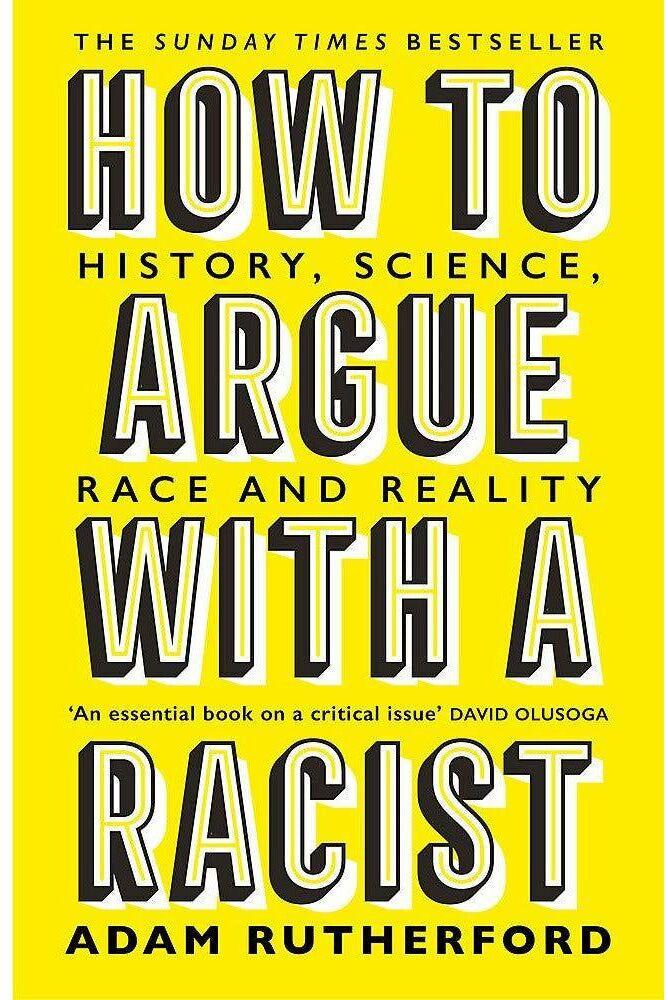
Mehdi Hasan, Adam Rutherford, Leil Lowndes Win Every Argument, How to Argue With a Racist, How to Talk to Anyone 3 Books Collection SetDescription. Condition: BRAND NEW. Format: Paperback. Win Every Argument:. In this riveting guide to the art of argument, British-American journalist Mehdi Hasan reveals for the first time how to communicate with confidence, rise above the tit for tats on social media, and triumph in a successful and productive debate. Whether you're making a presentation at work, conducting interviews, or debating current political issues with a friend, Hasan will teach you how to sharpen your speaking skills to make the winning case.. How to Argue With a Racist:. Racist pseudoscience may be on the rise, but science is no ally to racists. Instead science and history can be powerful allies against bigotry, granting us the clearest view of how people actually are, rather than how we judge them to be. HOW TO ARGUE WITH A RACIST dismantles outdated notions of race by illuminating what modern genetics can and can't tell us about human difference. It is a vital manifesto for a twenty-first century understanding of human evolution and variation, and a timely weapon against the misuse of science to justify racism.. How to Talk to Anyone:. In How To Talk To Anyone, bestselling relationships author and internationally renowned life coach Leil Lowndes reveals the secrets and psychology behind successful communication. These extremely usable and intelligent techniques include how to: Work a party like a politician works a room; Be an insider in any crowd; Use key words and phrases to guide the conversation; Use body language to connect.. Title. Win Every Argument, How to Argue With a Racist, How to Talk to Anyone 3 Books Collection Set. Delivery. Content. Reviews17,99 £*Shipping: 2,99 £Secure redirect to the provider
-
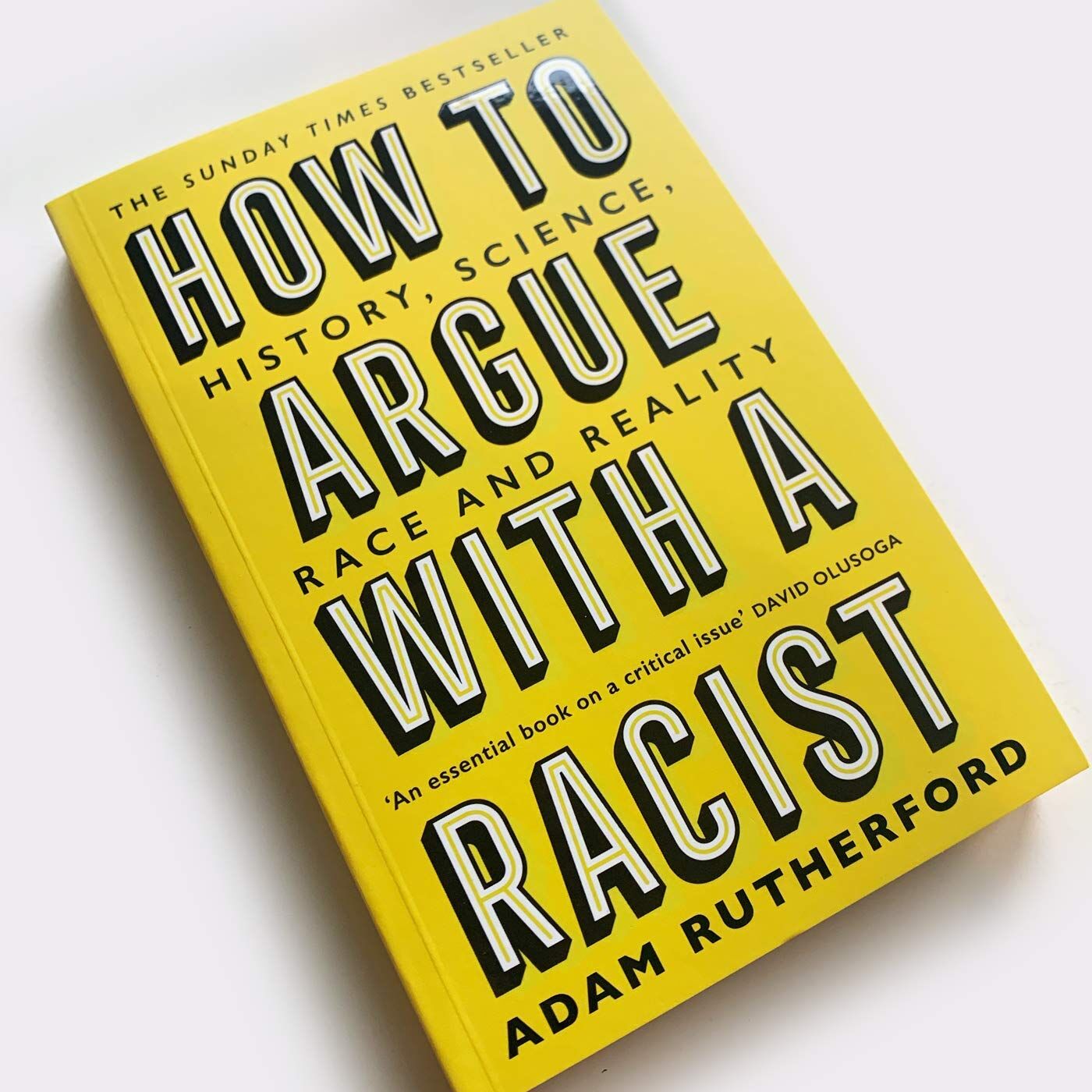
Adam Rutherford How to Argue with a Racist: History, Science, Race and Reality - Non Fiction - PaperbackTitle:. How to Argue With a Racist: History, Science, Race and Reality Condition: BRAND NEW. Format: Paperback Overview:. This timely non-fiction explores how to challenge racist ideas by rooting discussion in history and robust science. How to Argue With a Racist examines how the concept of race has evolved across centuries and why biology does not support racial hierarchies. Adam Rutherford, a British geneticist and science communicator, guides readers through the evolving study of human variation, showing that genetic differences between populations are small and do not justify sweeping claims about intelligence, behavior, or worth. The book connects these ideas to real-world conversations—politics, migration, education, sport and beyond—demonstrating that misinformation about race can influence policy and everyday judgments. Rather than a dry treatise, the work offers practical, accessible reasoning: clear talking points, verification tricks, and thoughtful, respectful responses that dismantle pseudoscience without resorting to hostility. It aims to empower readers to think critically, respond confidently, and protect vulnerable communities through informed dialogue. This is a indispensable guide for students, educators, parents, book clubs, and anyone who wants to participate in public debate with accuracy and empathy. What Makes This Book Stand Out:. Adam Rutherford brings the power of rigorous science to a pressing social issue with clarity and wit. The book blends history, anthropology, and genetics to debunk the notion of race as a biological reality, while tracing how race science has shaped policy and prejudice. Rutherford’s voice remains authoritative yet accessible, translating dense evidence into practical conclusions you can apply in conversations, classrooms, or online debate. The structure encourages reflection and dialogue, featuring concise explanations, concrete examples, and strategies for challenging misinformation without alienating listeners. It’s widely recognised as a timely antidote to racial pseudoscience, with notable reception that highlights its usefulness for data lovers, students, and anyone seeking to understand how science informs public discourse about race. The work has been celebrated for turning complex scientific ideas into a persuasive, constructive toolkit for everyday life. Who This Book Is Perfect For:. This book is ideal for curious readers who want a solid grasp of the science behind race and racism. It suits adults and older teens engaged with non-fiction, science, history, and social issues, as well as educators, students, librarians, and book clubs seeking evidence-based discussion material. If you’re preparing for debates, coursework, or policy conversations, this book provides a reliable foundation to counter misinformation with nuance and respect. It also makes a thoughtful gift for parents, science enthusiasts, and colleagues who want to engage constructively in conversations about bias,...99,99 £*Shipping: 0,00 £Secure redirect to the provider
-
Philip Steele, Josephine Quinn, Adam Rutherford How the World Made West, Brief History of Everyone, How to Argue Racist 3 Books Collection SetDescription. How the World Made the West:. Moving from the Bronze Age to the Age of Exploration, How the World Made the West reveals a new narrative: one that traces the millennia of global encounters and exchange that built what is now called the West, as societies met, tangled and sometimes grew apart. From the creation of the alphabet by Levantine workers in Egypt, who in a foreign land were prompted to write things down in their own language for the first time, to the arrival of Indian numbers in Europe via the Arab world, Quinn makes the case that understanding societies in isolation is both out-of-date and wrong. It is contact and connections, rather than solitary civilisations, that drive historical change. It is not peoples that make history - people do..... A Brief History of Everyone Who Ever Lived:. It is the history of who you are and how you came to be. It is unique to you, as it is to each of the 100 billion modern humans who have ever drawn breath. But it is also our collective story, because in every one of our genomes we each carry the history of our species - births, deaths, disease, war, famine, migration and a lot of sex.In this captivating journey through the expanding landscape of genetics, Adam Rutherford reveals what our genes now tell us about human history, and what history can now tell us about our genes. From Neanderthals to murder, from redheads to race, dead kings to plague, evolution to epigenetics, this is a demystifying and illuminating new portrait of who we are and how we came to be..... How to Argue With a Racist:. Racist pseudoscience may be on the rise, but science is no ally to racists. Instead science and history can be powerful allies against bigotry, granting us the clearest view of how people actually are, rather than how we judge them to be. HOW TO ARGUE WITH A RACIST dismantles outdated notions of race by illuminating what modern genetics can and can't tell us about human difference. It is a vital manifesto for a twenty-first century understanding of human evolution and variation, and a timely weapon against the misuse of science to justify racism..... Title. How the World Made West, Brief History of Everyone, How to Argue Racist 3 Books Collection Set. Delivery. Content. Reviews22,99 £*Shipping: 2,99 £Secure redirect to the provider
-
How to Argue With a Racist & The Book of Humans 4 Books Collection Set by Adam Rutherford - Non Fiction - PaperbackTitles in This Set:. How to Argue With a Racist. The Book of Humans. A Brief History of Everyone Who Ever Lived. Rutherford and Fry’s Complete Guide to Absolutely Everything (Abridged) Condition: BRAND NEW. Format: Paperback Overview:. This four-book collection gathers Adam Rutherford’s provocative exploration of genetics, humanity, and science communication into a single, accessible package. What you’re buying is a cohesive reading journey that invites curiosity, not confrontation, while equipping readers with clear, evidence-based perspectives on controversial topics. How to Argue With a Racist challenges the misuse of science in racial myths with sharp logic and compassionate argument, a vital read for informed citizenship. The Book of Humans dives into the surprising ways our biology shapes who we are, offering a lively tour of evolution, anatomy, and culture. A Brief History of Everyone Who Ever Lived reveals how our genomes carry the story of humanity—births, migrations, wars, and discoveries—pulled together into a fascinating map of our shared past. Rutherford and Fry’s Complete Guide to Absolutely Everything (Abridged) is a fast-paced, entertaining primer that demystifies time, space, and the brain with clarity and wit. Together, these four titles form a complete, gift-ready collection for science lovers, curious minds, and lifelong learners seeking engaging, credible non-fiction. What Makes This Collection Special:. Each title in the set complements the others, weaving a cohesive reading journey that deepens understanding of how science explains who we are and why we behave the way we do. From debunking myths about race to tracing the genome’s vast history, Rutherford presents complex ideas in approachable language without compromising accuracy. The pairing with Rutherford and Fry’s energetic guide adds a playful, accessible entry point for readers new to science, while rewarding more seasoned learners with fresh angles and rich context. This collection is ideal for curious non-fiction fans looking to broaden their perspectives, students preparing for exams, or gift buyers seeking a thoughtful, conversation-starting set that blends rigor with readability. Books Included in This Collection:. How to Argue With a Racist. This volume tackles a difficult but essential conversation: how to challenge racist assumptions without losing credibility or empathy. Rutherford combines genetics, history, and social science to show why biology is not a justification for prejudice, and how informed, respectful dialogue can make a real difference in public discourse. With practical arguments, real-world examples, and a calm, persuasive voice, this book equips readers to respond thoughtfully in politics, education, and everyday life. The Book of Humans. A vivid tour through the species’ biology and behavior, this book traces what makes humans distinctive—consciousness, creativity, and the quirks of our bodies. Rutherford blends science with cultural insight...25,99 £*Shipping: 2,99 £Secure redirect to the provider


-
What is the Rutherford-Bohr model?
The Rutherford-Bohr model is a model of the atom proposed by Niels Bohr in 1913, building upon Ernest Rutherford's discovery of the atomic nucleus. In this model, electrons orbit the nucleus in specific energy levels or shells, rather than moving in random paths. These energy levels are quantized, meaning electrons can only occupy certain discrete energy levels. The model successfully explained the spectral lines of hydrogen and provided a more accurate description of the structure of the atom compared to previous models. **
-
What is the Rutherford scattering experiment?
The Rutherford scattering experiment was conducted by physicist Ernest Rutherford in 1909. In this experiment, Rutherford bombarded a thin gold foil with alpha particles and observed their scattering patterns. The unexpected results of the experiment led to the discovery of the atomic nucleus and the development of the nuclear model of the atom. The experiment showed that most of the alpha particles passed through the foil, but some were deflected at large angles, indicating the presence of a small, dense nucleus within the atom. This experiment revolutionized our understanding of the structure of the atom. **
-
What are alternatives to plastic for takeout food or delivery services?
There are several alternatives to plastic for takeout food or delivery services. Some options include using compostable or biodegradable containers made from materials like paper, bamboo, or sugarcane. Reusable containers or packaging made from glass or stainless steel are also eco-friendly choices. Additionally, restaurants can encourage customers to bring their own containers for takeout orders to reduce single-use plastic waste. **
-
Would you name your son Adam and how does the name Adam sound to you?
I personally like the name Adam, as it is classic and timeless. It has a strong and masculine sound to it. If I were to have a son, I would consider naming him Adam as it is a name that has a positive connotation and is easy to pronounce. **

Did God lie to Adam?
No, God did not lie to Adam. In the story of Adam and Eve in the Bible, God warned them not to eat from the tree of the knowledge of good and evil, and He told them that they would die if they did. When they disobeyed and ate from the tree, they did experience the consequences of their actions, just as God had said. Therefore, God did not lie to Adam, but rather gave him a clear warning about the consequences of his actions. **
Did Adam and Eve mate in order to have children?
Yes, according to the biblical account in Genesis, Adam and Eve mated in order to have children. After being created by God, they were instructed to "be fruitful and multiply" (Genesis 1:28), which implies the purpose of procreation through mating. This is further supported by the birth of their sons Cain, Abel, and Seth, as well as the mention of Adam "knowing" Eve, which is a euphemism for sexual intercourse. Therefore, it can be inferred that Adam and Eve mated in order to fulfill the command to populate the earth. **
Top-Angebote
Products related to Adam-Rutherford-How-to:
-
Orion How to Argue With a Racist by Adam Rutherford – Science, Race & Truth ExplainedRacist pseudoscience may be on the rise, but science is no ally to racists. Instead science and history can be powerful allies against bigotry, granting us the clearest view of how people actually are, rather than how we judge them to be. HOW TO ARGUE WITH A RACIST dismantles outdated notions of race by illuminating what modern genetics can and can't tell us about human difference. It is a vital manifesto for a twenty-first century understanding of human evolution and variation, and a timely weapon against the misuse of science to justify racism.3,99 £*Shipping: 1,99 £Secure redirect to the provider
-
Adam Rutherford How to Argue With a Racist: History, Science, Race - Non Fiction - HardbackTitle:. How to Argue With a Racist: History, Science, Race and Reality Condition: BRAND NEW. Format: Hardcover Overview:. Race is widely perceived as a real category, but the book’s core argument is that race is a social construct while racism remains a tangible and dangerous force in society. Adam Rutherford guides readers through a rigorous tour of history, genetics, and contemporary culture to show why attempts to anchor human difference in biology are scientifically unfounded and ethically harmful. This book equips readers with clear, evidence-based explanations of how human genetic variation actually works, how populations are related, and why modern science rejects fixed racial hierarchies. It also dissects the seductive but misleading uses of data in public debates about migration, education, intelligence, and sport. Written for curious readers and students alike, the author translates complex genetics into accessible, concrete examples drawn from real-world situations, helping readers recognize pseudoscience, debunk stereotypes, and engage in constructive dialogue. The hardcover edition presents a concise, readable companion for classrooms, book clubs, or thoughtful conversations on social media, making this a vital resource in the ongoing fight against racial prejudice. What Makes This Book Stand Out:. Adam Rutherford blends a historian’s perspective with a geneticist’s precision to illuminate why race as a biological category never stood up to scrutiny, and why racism persists despite that truth. What distinguishes this work is its dual clarity and courage: it not only unpacks the science behind human diversity but also analyzes the social forces that weaponize that science to justify discrimination. Rutherford’s approach is decidedly practical—he offers approachable explanations of population genetics, discusses how data can be misinterpreted, and provides ready-to-use arguments for conversations with skeptical friends, students, or readers online. He also foregrounds the ethics of scientific communication, urging readers to demand evidence, question assumptions, and separate human value from statistical variation. This is more than a textbook; it’s a persuasive, timely guide for anyone who wants to challenge racism with intellectual honesty and empathy. Who This Book Is Perfect For:. If you’re curious about how science intersects with social justice, this book is for you. It’s ideal for students, educators, journalists, and anyone engaging in public debates about race, genetics, and identity. Parents and caregivers will value the accessible explanations that help explain difficult topics to younger readers, while book clubs and discussion groups will find ample material for thoughtful conversation. Perfect for readers who enjoy science communication, history-informed analysis, and debates about policy and culture, it also works well for BookTok and other communities seeking credible, engaging material that supports informed,...99,99 £*Shipping: 0,00 £Secure redirect to the provider
-
Mehdi Hasan, Adam Rutherford, Leil Lowndes Win Every Argument, How to Argue With a Racist, How to Talk to Anyone 3 Books Collection SetDescription. Condition: BRAND NEW. Format: Paperback. Win Every Argument:. In this riveting guide to the art of argument, British-American journalist Mehdi Hasan reveals for the first time how to communicate with confidence, rise above the tit for tats on social media, and triumph in a successful and productive debate. Whether you're making a presentation at work, conducting interviews, or debating current political issues with a friend, Hasan will teach you how to sharpen your speaking skills to make the winning case.. How to Argue With a Racist:. Racist pseudoscience may be on the rise, but science is no ally to racists. Instead science and history can be powerful allies against bigotry, granting us the clearest view of how people actually are, rather than how we judge them to be. HOW TO ARGUE WITH A RACIST dismantles outdated notions of race by illuminating what modern genetics can and can't tell us about human difference. It is a vital manifesto for a twenty-first century understanding of human evolution and variation, and a timely weapon against the misuse of science to justify racism.. How to Talk to Anyone:. In How To Talk To Anyone, bestselling relationships author and internationally renowned life coach Leil Lowndes reveals the secrets and psychology behind successful communication. These extremely usable and intelligent techniques include how to: Work a party like a politician works a room; Be an insider in any crowd; Use key words and phrases to guide the conversation; Use body language to connect.. Title. Win Every Argument, How to Argue With a Racist, How to Talk to Anyone 3 Books Collection Set. Delivery. Content. Reviews17,99 £*Shipping: 2,99 £Secure redirect to the provider
-
Adam Rutherford How to Argue with a Racist: History, Science, Race and Reality - Non Fiction - PaperbackTitle:. How to Argue With a Racist: History, Science, Race and Reality Condition: BRAND NEW. Format: Paperback Overview:. This timely non-fiction explores how to challenge racist ideas by rooting discussion in history and robust science. How to Argue With a Racist examines how the concept of race has evolved across centuries and why biology does not support racial hierarchies. Adam Rutherford, a British geneticist and science communicator, guides readers through the evolving study of human variation, showing that genetic differences between populations are small and do not justify sweeping claims about intelligence, behavior, or worth. The book connects these ideas to real-world conversations—politics, migration, education, sport and beyond—demonstrating that misinformation about race can influence policy and everyday judgments. Rather than a dry treatise, the work offers practical, accessible reasoning: clear talking points, verification tricks, and thoughtful, respectful responses that dismantle pseudoscience without resorting to hostility. It aims to empower readers to think critically, respond confidently, and protect vulnerable communities through informed dialogue. This is a indispensable guide for students, educators, parents, book clubs, and anyone who wants to participate in public debate with accuracy and empathy. What Makes This Book Stand Out:. Adam Rutherford brings the power of rigorous science to a pressing social issue with clarity and wit. The book blends history, anthropology, and genetics to debunk the notion of race as a biological reality, while tracing how race science has shaped policy and prejudice. Rutherford’s voice remains authoritative yet accessible, translating dense evidence into practical conclusions you can apply in conversations, classrooms, or online debate. The structure encourages reflection and dialogue, featuring concise explanations, concrete examples, and strategies for challenging misinformation without alienating listeners. It’s widely recognised as a timely antidote to racial pseudoscience, with notable reception that highlights its usefulness for data lovers, students, and anyone seeking to understand how science informs public discourse about race. The work has been celebrated for turning complex scientific ideas into a persuasive, constructive toolkit for everyday life. Who This Book Is Perfect For:. This book is ideal for curious readers who want a solid grasp of the science behind race and racism. It suits adults and older teens engaged with non-fiction, science, history, and social issues, as well as educators, students, librarians, and book clubs seeking evidence-based discussion material. If you’re preparing for debates, coursework, or policy conversations, this book provides a reliable foundation to counter misinformation with nuance and respect. It also makes a thoughtful gift for parents, science enthusiasts, and colleagues who want to engage constructively in conversations about bias,...99,99 £*Shipping: 0,00 £Secure redirect to the provider
-
What material did Rutherford need?
Rutherford needed a material that was very thin and could be easily penetrated by alpha particles. He used gold foil because it could be hammered into extremely thin sheets, just a few atoms thick. This allowed the alpha particles to pass through the foil and be detected on the other side, which was crucial for his experiment to study the structure of the atom. **
-
What is the Rutherford nuclear model?
The Rutherford nuclear model, proposed by physicist Ernest Rutherford in 1911, describes the structure of an atom as a small, dense, positively charged nucleus at the center, surrounded by negatively charged electrons orbiting around it. This model was based on the results of Rutherford's famous gold foil experiment, which showed that most of the alpha particles passed through the foil undeflected, but some were deflected at large angles, indicating the presence of a small, dense nucleus. The Rutherford model laid the foundation for our modern understanding of the atomic structure and the development of the atomic theory. **
-
What is the Rutherford-Bohr model?
The Rutherford-Bohr model is a model of the atom proposed by Niels Bohr in 1913, building upon Ernest Rutherford's discovery of the atomic nucleus. In this model, electrons orbit the nucleus in specific energy levels or shells, rather than moving in random paths. These energy levels are quantized, meaning electrons can only occupy certain discrete energy levels. The model successfully explained the spectral lines of hydrogen and provided a more accurate description of the structure of the atom compared to previous models. **
-
What is the Rutherford scattering experiment?
The Rutherford scattering experiment was conducted by physicist Ernest Rutherford in 1909. In this experiment, Rutherford bombarded a thin gold foil with alpha particles and observed their scattering patterns. The unexpected results of the experiment led to the discovery of the atomic nucleus and the development of the nuclear model of the atom. The experiment showed that most of the alpha particles passed through the foil, but some were deflected at large angles, indicating the presence of a small, dense nucleus within the atom. This experiment revolutionized our understanding of the structure of the atom. **
Similar search terms for Adam-Rutherford-How-to
-
Philip Steele, Josephine Quinn, Adam Rutherford How the World Made West, Brief History of Everyone, How to Argue Racist 3 Books Collection SetDescription. How the World Made the West:. Moving from the Bronze Age to the Age of Exploration, How the World Made the West reveals a new narrative: one that traces the millennia of global encounters and exchange that built what is now called the West, as societies met, tangled and sometimes grew apart. From the creation of the alphabet by Levantine workers in Egypt, who in a foreign land were prompted to write things down in their own language for the first time, to the arrival of Indian numbers in Europe via the Arab world, Quinn makes the case that understanding societies in isolation is both out-of-date and wrong. It is contact and connections, rather than solitary civilisations, that drive historical change. It is not peoples that make history - people do..... A Brief History of Everyone Who Ever Lived:. It is the history of who you are and how you came to be. It is unique to you, as it is to each of the 100 billion modern humans who have ever drawn breath. But it is also our collective story, because in every one of our genomes we each carry the history of our species - births, deaths, disease, war, famine, migration and a lot of sex.In this captivating journey through the expanding landscape of genetics, Adam Rutherford reveals what our genes now tell us about human history, and what history can now tell us about our genes. From Neanderthals to murder, from redheads to race, dead kings to plague, evolution to epigenetics, this is a demystifying and illuminating new portrait of who we are and how we came to be..... How to Argue With a Racist:. Racist pseudoscience may be on the rise, but science is no ally to racists. Instead science and history can be powerful allies against bigotry, granting us the clearest view of how people actually are, rather than how we judge them to be. HOW TO ARGUE WITH A RACIST dismantles outdated notions of race by illuminating what modern genetics can and can't tell us about human difference. It is a vital manifesto for a twenty-first century understanding of human evolution and variation, and a timely weapon against the misuse of science to justify racism..... Title. How the World Made West, Brief History of Everyone, How to Argue Racist 3 Books Collection Set. Delivery. Content. Reviews22,99 £*Shipping: 2,99 £Secure redirect to the provider
-
How to Argue With a Racist & The Book of Humans 4 Books Collection Set by Adam Rutherford - Non Fiction - PaperbackTitles in This Set:. How to Argue With a Racist. The Book of Humans. A Brief History of Everyone Who Ever Lived. Rutherford and Fry’s Complete Guide to Absolutely Everything (Abridged) Condition: BRAND NEW. Format: Paperback Overview:. This four-book collection gathers Adam Rutherford’s provocative exploration of genetics, humanity, and science communication into a single, accessible package. What you’re buying is a cohesive reading journey that invites curiosity, not confrontation, while equipping readers with clear, evidence-based perspectives on controversial topics. How to Argue With a Racist challenges the misuse of science in racial myths with sharp logic and compassionate argument, a vital read for informed citizenship. The Book of Humans dives into the surprising ways our biology shapes who we are, offering a lively tour of evolution, anatomy, and culture. A Brief History of Everyone Who Ever Lived reveals how our genomes carry the story of humanity—births, migrations, wars, and discoveries—pulled together into a fascinating map of our shared past. Rutherford and Fry’s Complete Guide to Absolutely Everything (Abridged) is a fast-paced, entertaining primer that demystifies time, space, and the brain with clarity and wit. Together, these four titles form a complete, gift-ready collection for science lovers, curious minds, and lifelong learners seeking engaging, credible non-fiction. What Makes This Collection Special:. Each title in the set complements the others, weaving a cohesive reading journey that deepens understanding of how science explains who we are and why we behave the way we do. From debunking myths about race to tracing the genome’s vast history, Rutherford presents complex ideas in approachable language without compromising accuracy. The pairing with Rutherford and Fry’s energetic guide adds a playful, accessible entry point for readers new to science, while rewarding more seasoned learners with fresh angles and rich context. This collection is ideal for curious non-fiction fans looking to broaden their perspectives, students preparing for exams, or gift buyers seeking a thoughtful, conversation-starting set that blends rigor with readability. Books Included in This Collection:. How to Argue With a Racist. This volume tackles a difficult but essential conversation: how to challenge racist assumptions without losing credibility or empathy. Rutherford combines genetics, history, and social science to show why biology is not a justification for prejudice, and how informed, respectful dialogue can make a real difference in public discourse. With practical arguments, real-world examples, and a calm, persuasive voice, this book equips readers to respond thoughtfully in politics, education, and everyday life. The Book of Humans. A vivid tour through the species’ biology and behavior, this book traces what makes humans distinctive—consciousness, creativity, and the quirks of our bodies. Rutherford blends science with cultural insight...25,99 £*Shipping: 2,99 £Secure redirect to the provider
-
Adam Wallace How to Catch Series 4 Books Collection Set ( How to Catch a Monster)Description. How to Catch a Monster. There's a monster in my closet,. with claws, and teeth, and hair,. and tonight, I'm going to scare him!. He lives just right through there.... In How to Catch a Monster, a young ninja faces his fears and meets the creature lurking in his closet! A laugh-out-loud adventure, this story proves that appearances can be deceiving. What if the monster isn't scary after all? Make the unlikeliest of friends in this Halloween book that your kids will want to read again and again!. How to Catch a Mermaid. Many claim to have caught a mermaid, but can YOU?. How do you catch a mermaid?. You must be very clever.. With mirrors, crowns, and pearls galore,. this quest can’t last forever!. How to Catch a Unicorn. Try to catch one of the world's most elusive mythical creatures—the unicorn! Filled with zany traps and lots of rainbow unicorn fun, this is the unicorn book of the year!. Can you catch the unicorn?. You’ll have to use your brain,. So set your traps and prep your team. To pet that rainbow mane!. How to Catch a Dragon. The How to Catch kids are off again, this time trying to catch a dragon as they chase him through Chinese New Year celebrations! Set in China during the Spring Festival, otherwise known as Chinese New Year, the wily dragon will have to avoid trap after trap as the kids run through paper lanterns, red envelopes, fireworks, and more! Bonus Mandarin translation included in the back!. Dragons are a clever bunch,. They’re difficult to catch.. You’ll have to set the ultimate trap—. But have you met your match?. Title. How to Catch Series 4 Books Collection Set ( How to Catch a Monster). Delivery. Content. Reviews99,99 £*Shipping: 0,00 £Secure redirect to the provider
-
Orion Adam Rutherford 3 Books Collection Set (A Brief History of Everyone Who Ever Lived, How to Argue With a Racist & The Book of Humans)Adam Rutherford 3 Books Collection Set How to Argue With a Racist Race is real because we perceive it. Racism is real because we enact it. But the appeal to science to strengthen racist ideologies is on the rise - and increasingly part of the public discourse on politics, migration, education, sport and intelligence. Stereotypes and myths about race are expressed not just by overt racists, but also by well-intentioned people whose experience and cultural baggage steer them towards views that are not supported by the modern study of human genetics. Even some scientists are uncomfortable expressing opinions deriving from their research where it relates to race. The Book of Humans In this thrilling tour of the animal kingdom, Adam Rutherford tells the story of how we became the unique creatures we are today. Illuminated by the latest scientific discoveries, THE BOOK OF HUMANS is a dazzling compendium of what unequivocally fixes us as animals, and reveals how we are extraordinary among them. A Brief History of Everyone Who Ever Lived This is a story about you. It is the history of who you are and how you came to be. It is unique to you, as it is to each of the 100 billion modern humans who have ever drawn breath. But it is also our collective story, because in every one of our genomes we each carry the history of our species - births, deaths, disease, war, famine, migration and a lot of sex.In this captivating journey through the expanding landscape of genetics, Adam Rutherford reveals what our genes now tell us about human history, and what history can now tell us about our genes.12,99 £*Shipping: 2,99 £Secure redirect to the provider
-
What are alternatives to plastic for takeout food or delivery services?
There are several alternatives to plastic for takeout food or delivery services. Some options include using compostable or biodegradable containers made from materials like paper, bamboo, or sugarcane. Reusable containers or packaging made from glass or stainless steel are also eco-friendly choices. Additionally, restaurants can encourage customers to bring their own containers for takeout orders to reduce single-use plastic waste. **
-
Would you name your son Adam and how does the name Adam sound to you?
I personally like the name Adam, as it is classic and timeless. It has a strong and masculine sound to it. If I were to have a son, I would consider naming him Adam as it is a name that has a positive connotation and is easy to pronounce. **
-
Did God lie to Adam?
No, God did not lie to Adam. In the story of Adam and Eve in the Bible, God warned them not to eat from the tree of the knowledge of good and evil, and He told them that they would die if they did. When they disobeyed and ate from the tree, they did experience the consequences of their actions, just as God had said. Therefore, God did not lie to Adam, but rather gave him a clear warning about the consequences of his actions. **
-
Did Adam and Eve mate in order to have children?
Yes, according to the biblical account in Genesis, Adam and Eve mated in order to have children. After being created by God, they were instructed to "be fruitful and multiply" (Genesis 1:28), which implies the purpose of procreation through mating. This is further supported by the birth of their sons Cain, Abel, and Seth, as well as the mention of Adam "knowing" Eve, which is a euphemism for sexual intercourse. Therefore, it can be inferred that Adam and Eve mated in order to fulfill the command to populate the earth. **
* All prices are inclusive of VAT and, if applicable, plus shipping costs. The offer information is based on the details provided by the respective shop and is updated through automated processes. Real-time updates do not occur, so deviations can occur in individual cases. ** Note: Parts of this content were created by AI.